
The protocols of Healthy Living contain simple reminders of how to stay healthy and improve well-being. When we align our schedules to daily and seasonal changes, it becomes easier to feel better.
Daily changes include syncing our routines with nature's 24-hour cycle (more below). Seasonal changes means aligning our daily activities with nourishing foods and self-care routines according to weather patterns. For example, choosing cooling foods in the hot summer and warming spices in the cold winter to balance the effects of our environment.
How to get started
Getting in rhythm with nature is essential if you want to experience better health and vitality. Step one involves developing a regular routine and understanding THE SLEEP CYCLE. Working with the day-night rhythms that naturally govern our sleep-wake cycle maximizes the effectiveness of your body’s built-in clock.
Sleep is the first and most important step in aligning with nature's rhythms and improving overall health. Getting to bed on time is necessary to allow adequate time to rest, dream, and recharge. Your body organs detoxify during the night. Eliminating toxins creates a healthier body and mind. With good sleep, you will have the energy you need throughout the day.
Our Internal Clock
The connection of our body to nature can be summed up in a pattern known as the circadian rhythm. The circadian rhythm, our internal clock, follows a 24-hour day/night cycle. But, because of modern conveniences and demands, this natural rhythm is often over-ridden.
The circadian rhythm’s link to the light and dark cycle demonstrate the unique relationship the body has with nature’s rhythm. Our internal clock responds to daylight, darkness, and seasonal changes. Further, the link between the natural environment and daily habits either regulates or interferes with biological functions.
When we override the natural rhythm, we risk disrupting optimal health. But, by making a few adjustments to our daily schedule we can re-sync our connection to nature and optimize our health.
What is the circadian rhythm?
Our internal circadian rhythm is based on a 24-hour day and is regulated by the suprachiasmatic nuclei (SCN) in our brain. The SCN is responsive to light/dark exposure and regulates sleep, wakefulness, mood, and behavior.
This natural "clock" sends signals that regulate our body and our mind.
The circadian rhythm links to the natural light and dark cycle for hormone release, sleep, wakefulness, metabolism, and other internal processes.
The SCN also coordinates our cells and organs, including the lungs, liver, kidneys, and heart, and responds to food and exercise timing (Ma & Morrison, 2023).
How to get in sync with nature’s rhythms
To optimize health, we can adjust positively to synchronize our internal state with the external environment. If we ignore nature's rhythm and work against it by staying up late for example, we risk negative impacts such as metabolic dysfunction, inflammation (the root of many disorders), heart and circulatory disease, or diabetes (Peters, Vahlhaus, & Pivovarova-Ramich, 2024).
Getting in sync optimizes our health by enhancing the natural healing and detoxifying mechanisms in the body. You can think of it like the ultimate antiaging formula that has a bonus of decreasing risk of chronic disease - and getting better health numbers.
Make changes gradually over time rather than all at once. Planning and preparation are fundamental to your success. Set your intention to be consistent, even on weekends.
Here’s a few nourishing suggestions to help you ease into nature’s rhythms:
- Spend 15 minutes outdoors in the morning and evening.
- Plan nature walks a few times per week.
- Slow down, breathe (try this).
- Pay attention to the changing of seasons. Observe plants and natural landscapes.
- Listen to sounds in nature: birds and animals, leaves, water, wind.
Regularity is essential
Try to stick to a regular daily pattern and pay attention to how you feel. Eat meals at the same time each day, exercise at the same time, and sleep and wake up on time. Your body will naturally sync to this schedule and no longer need to expend energy adjusting to changes.
Time management plays a big role in this.
For example, if your day starts at 6 am, you'll need to get to sleep by 10 pm to get 8 hours of sleep. Sleep requirements may vary, but the point is to keep a regular schedule during the week AND on weekends.
Meal planning, exercise, spending time in nature, and the right mindset will help you in resetting your biological clock and goes a long way toward optimal health.
Simple but not always easy. Lean into these suggestions, experiment, and see what changes for you. I hope this inspires you to keep a regular schedule, one that is in rhythm with nature.
Remember: It’s important to discuss any changes to your diet or lifestyle with your healthcare provider before you begin. If you haven’t seen your provider, now is a good time to do so. Ask them about what you can do to maintain or improve your health.
Practice deep breathing to rebuild your connection to your body.
Belly Breathing
- Place one hand on your belly just below your rib cage, and the other in the center of your chest.
- Breathe in slowly through your nose, feeling your stomach move out against your hand.
- Relax your belly as you exhale. The hand on your upper chest should remain still.
- Repeat 3-5 times. Notice how you feel during and after. Rest a few minutes afterward.
Make time for belly breathing sessions. You can do this lying down or seated.
Looking for a Mindset Reset?
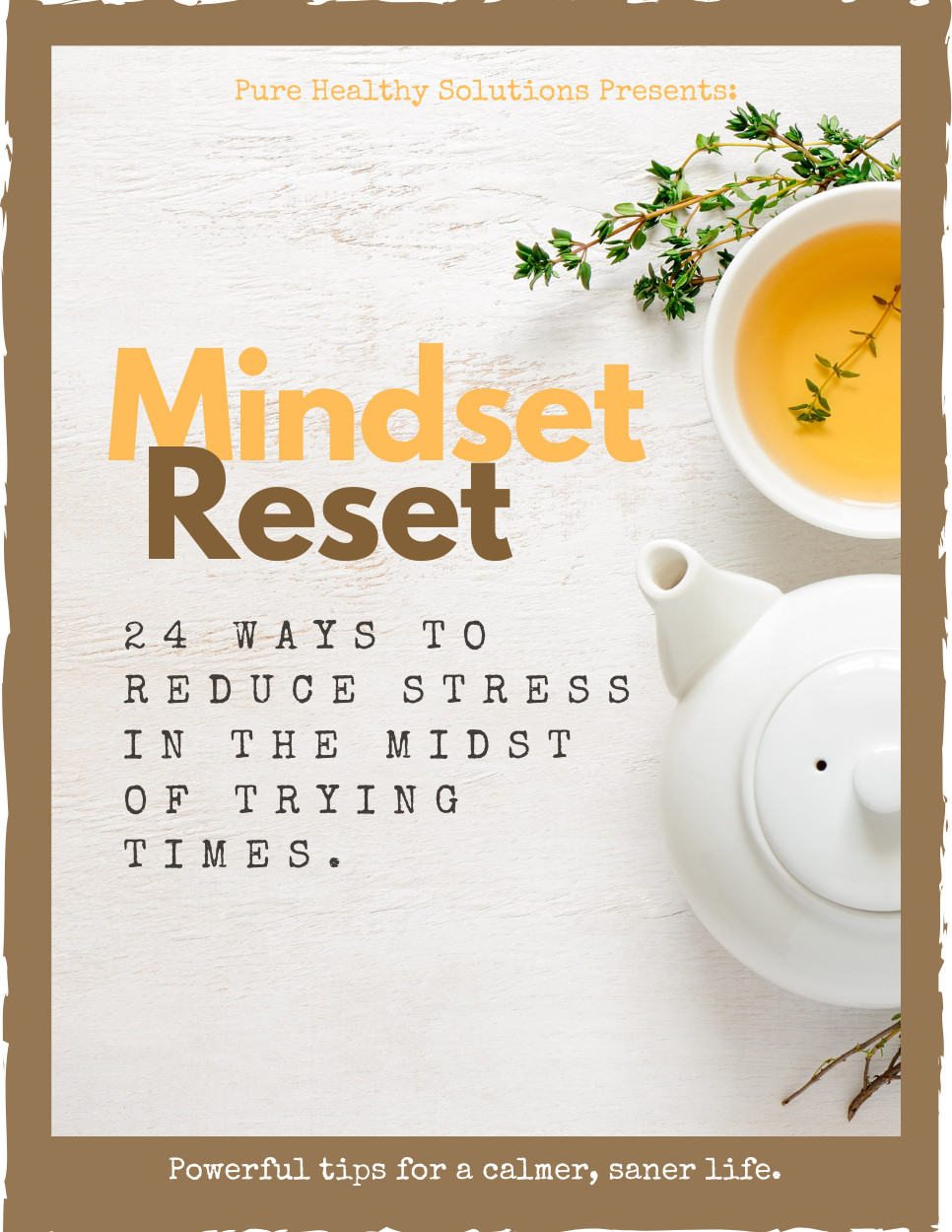
The powerful tips in this guide equip you with tools to reduce stress levels and improve your quality of life.
Inside the guide you'll find 2 more breathing techniques to instantly unwind, relax, and energize along with more tips to de-stress, soothe your spirit, and rediscover your focus.